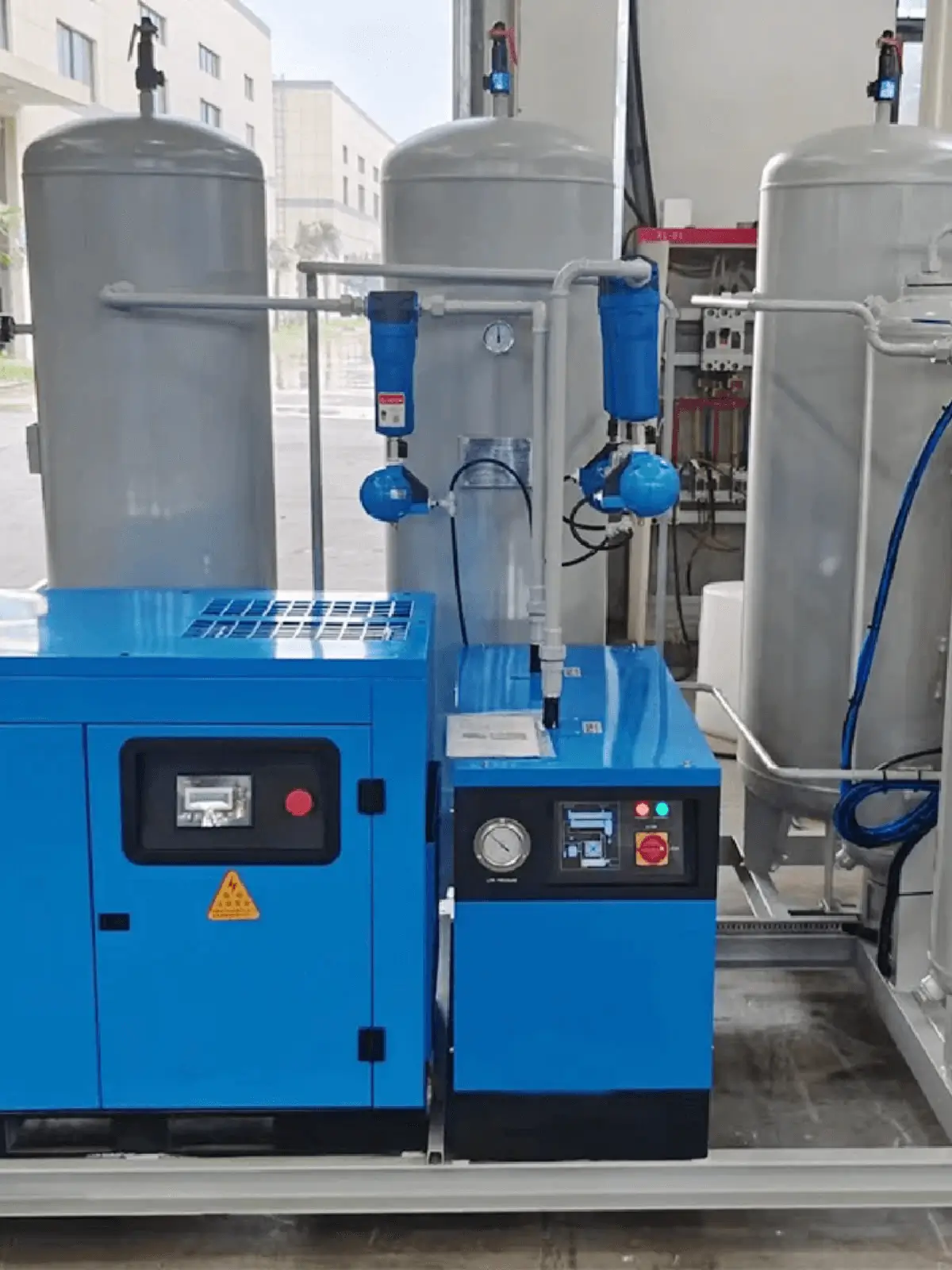
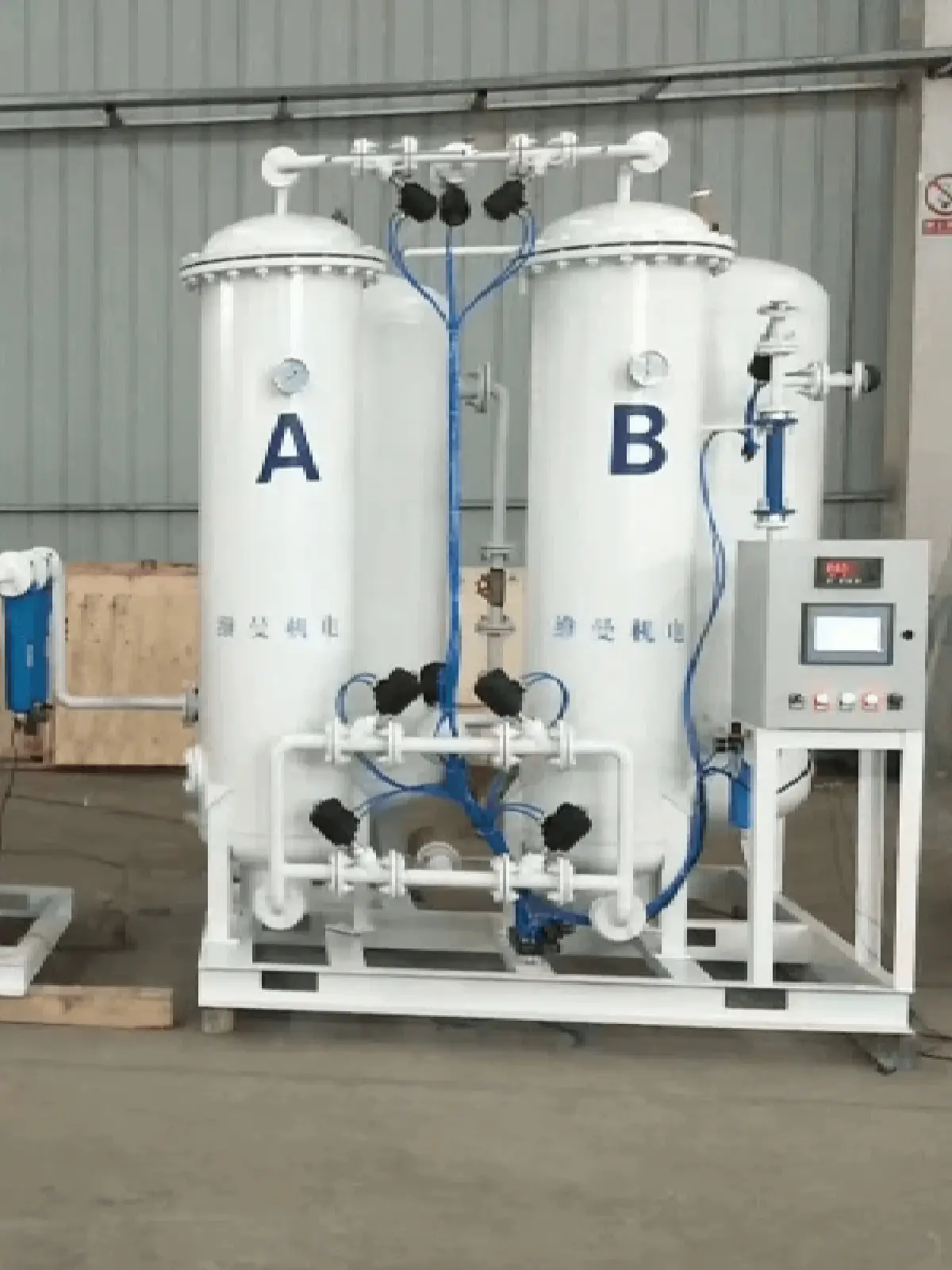
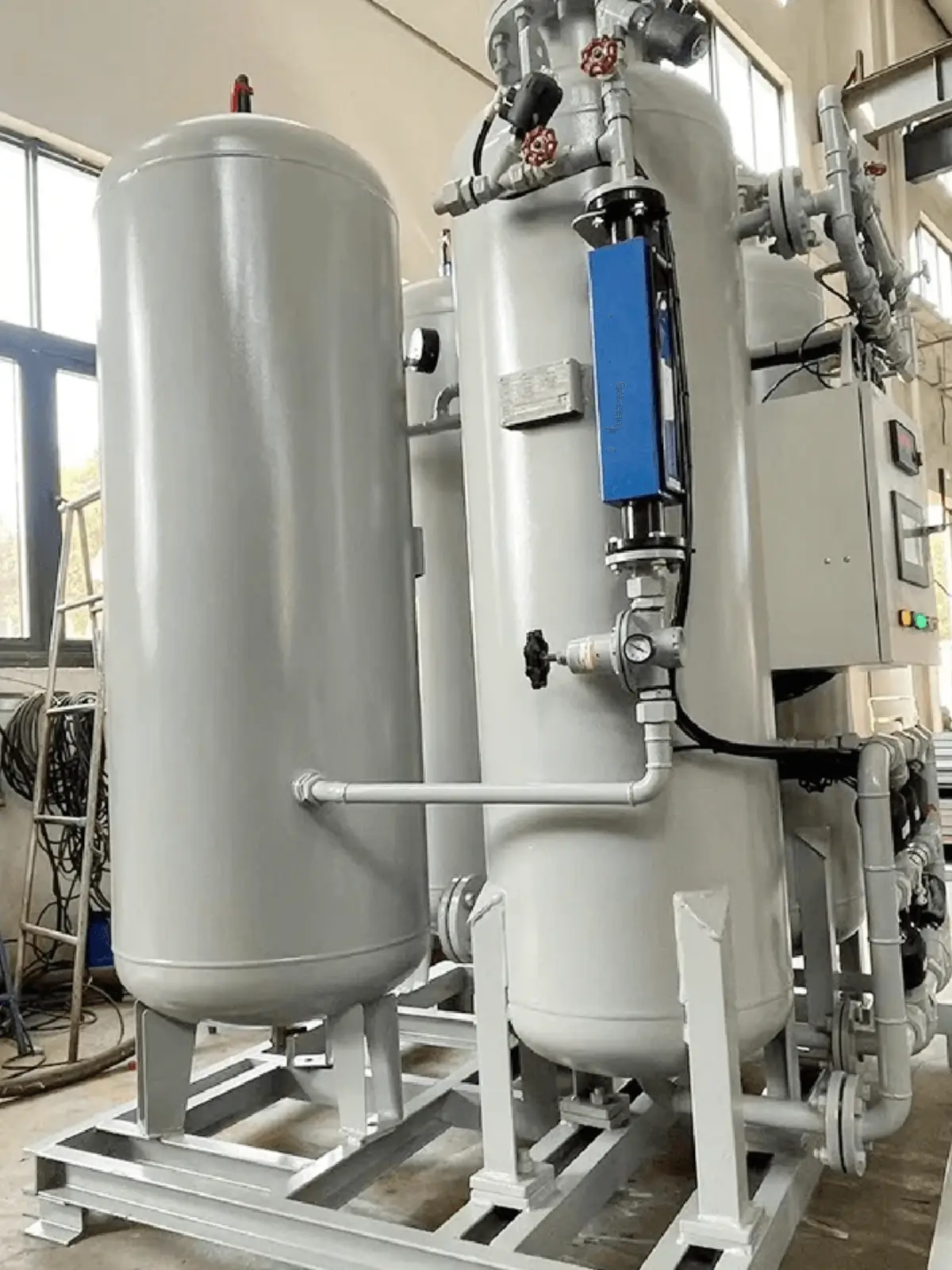
Ammonia decomposition plants for hydrogen production
This technology is considered one of the most modern and efficient methods for producing hydrogen in large quantities with significant savings in electricity consumption.
The principle is based on the decomposition of ammonia gas (NH₃) using high temperatures and special catalysts to separate hydrogen from nitrogen.
Working Principle:
1. Ammonia is introduced into a heating unit and catalysts.
2. Under the influence of heat, the chemical bonds between nitrogen and hydrogen atoms are broken.
3. The resulting hydrogen is separated and purified using advanced processes.
4. It is stored in large tanks or pumped to industrial use lines.
Advantages:
Continuous hydrogen production with capacities up to tens of cubic meters per hour.
Low electricity consumption compared to water electrolysis.
Able to operate in heavy industrial environments.
Safe and robust design that withstands high pressure and temperature.
Multiple safety systems for leak and temperature monitoring.
Uses:
Petrochemical plants.
Clean industrial fuel production.
Hydrogen electricity generation.
Metal smelting and heat treatment processes.
Ammonia decomposition plants for hydrogen production
This technology is considered one of the most modern and efficient methods for producing hydrogen in large quantities with significant savings in electricity consumption.
The principle is based on the decomposition of ammonia gas (NH₃) using high temperatures and special catalysts to separate hydrogen from nitrogen.
Working Principle:
1. Ammonia is introduced into a heating unit and catalysts.
2. Under the influence of heat, the chemical bonds between nitrogen and hydrogen atoms are broken.
3. The resulting hydrogen is separated and purified using advanced processes.
4. It is stored in large tanks or pumped to industrial use lines.
Advantages:
Continuous hydrogen production with capacities up to tens of cubic meters per hour.
Low electricity consumption compared to water electrolysis.
Able to operate in heavy industrial environments.
Safe and robust design that withstands high pressure and temperature.
Multiple safety systems for leak and temperature monitoring.
Uses:
Petrochemical plants.
Clean industrial fuel production.
Hydrogen electricity generation.
Metal smelting and heat treatment processes.

Reviews
Clear filtersThere are no reviews yet.