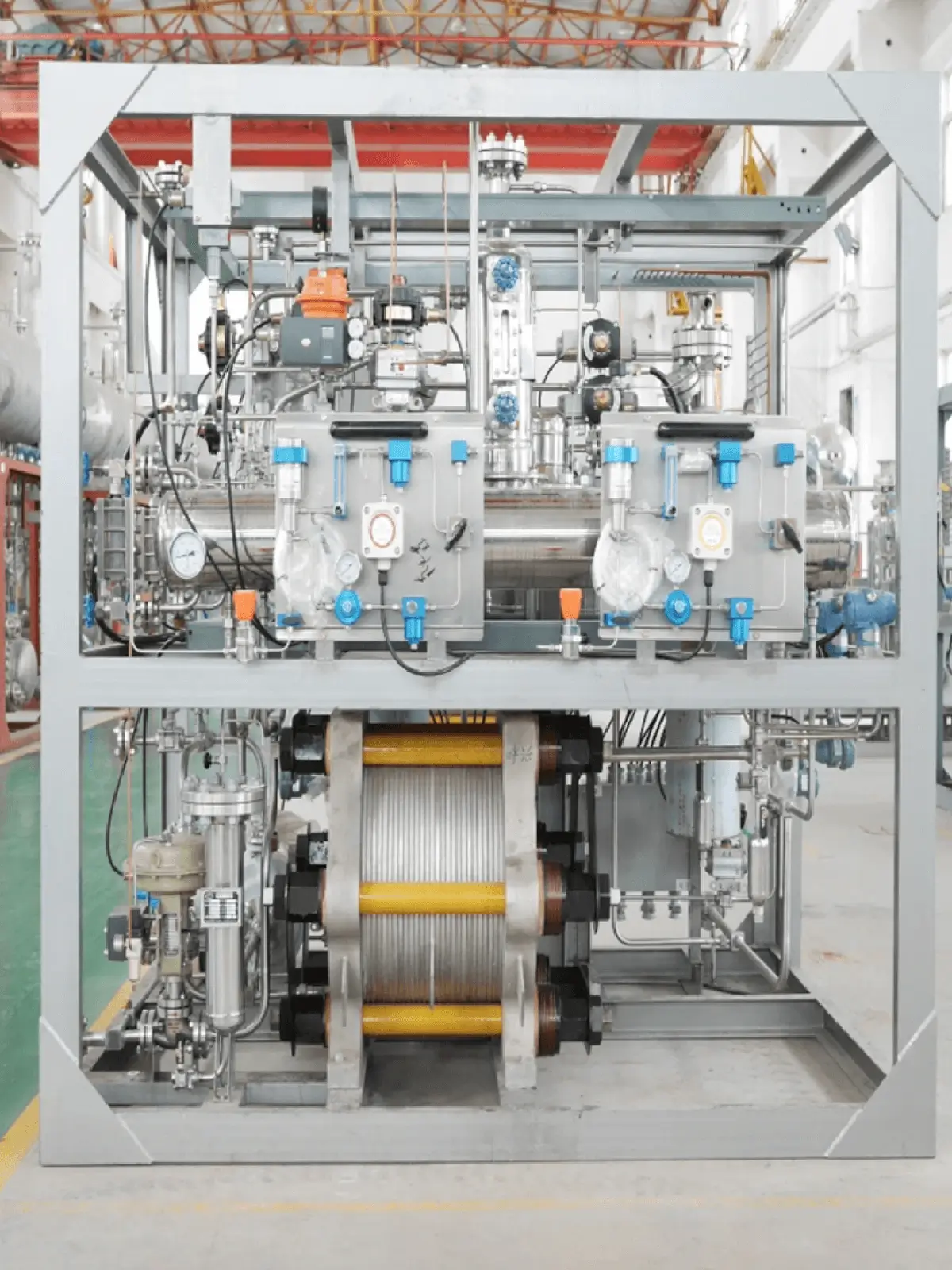
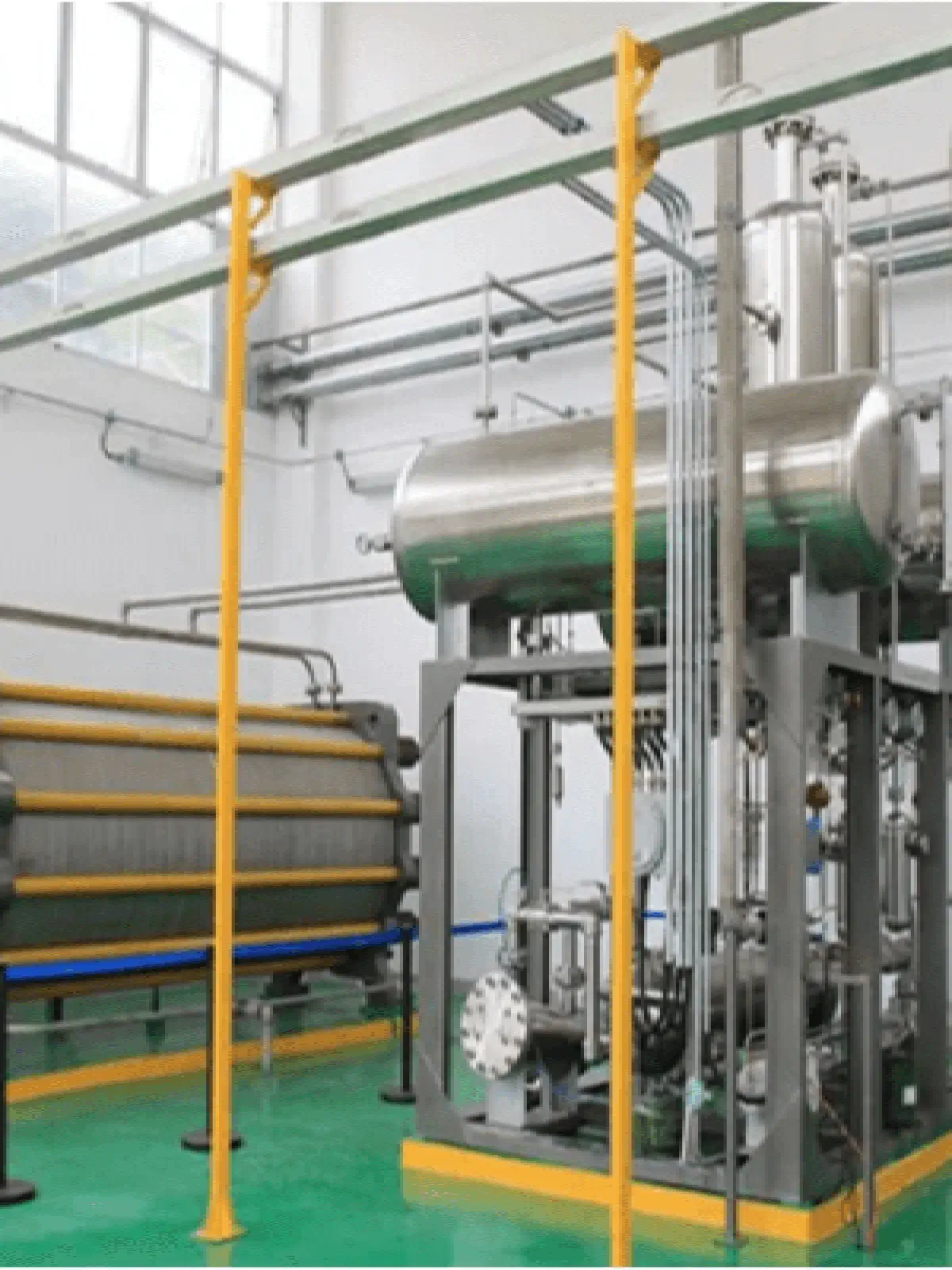
This technology splits water molecules (H₂O) into their two basic components: hydrogen (H₂) and oxygen (O₂) using an electric current.
This method is the cleanest and safest way to produce hydrogen, as it produces no carbon emissions or pollutants.
Working Principle:
1. Water is drawn into the electrolyzer.
2. A strong electric current passes through the electrodes, separating the hydrogen from the oxygen.
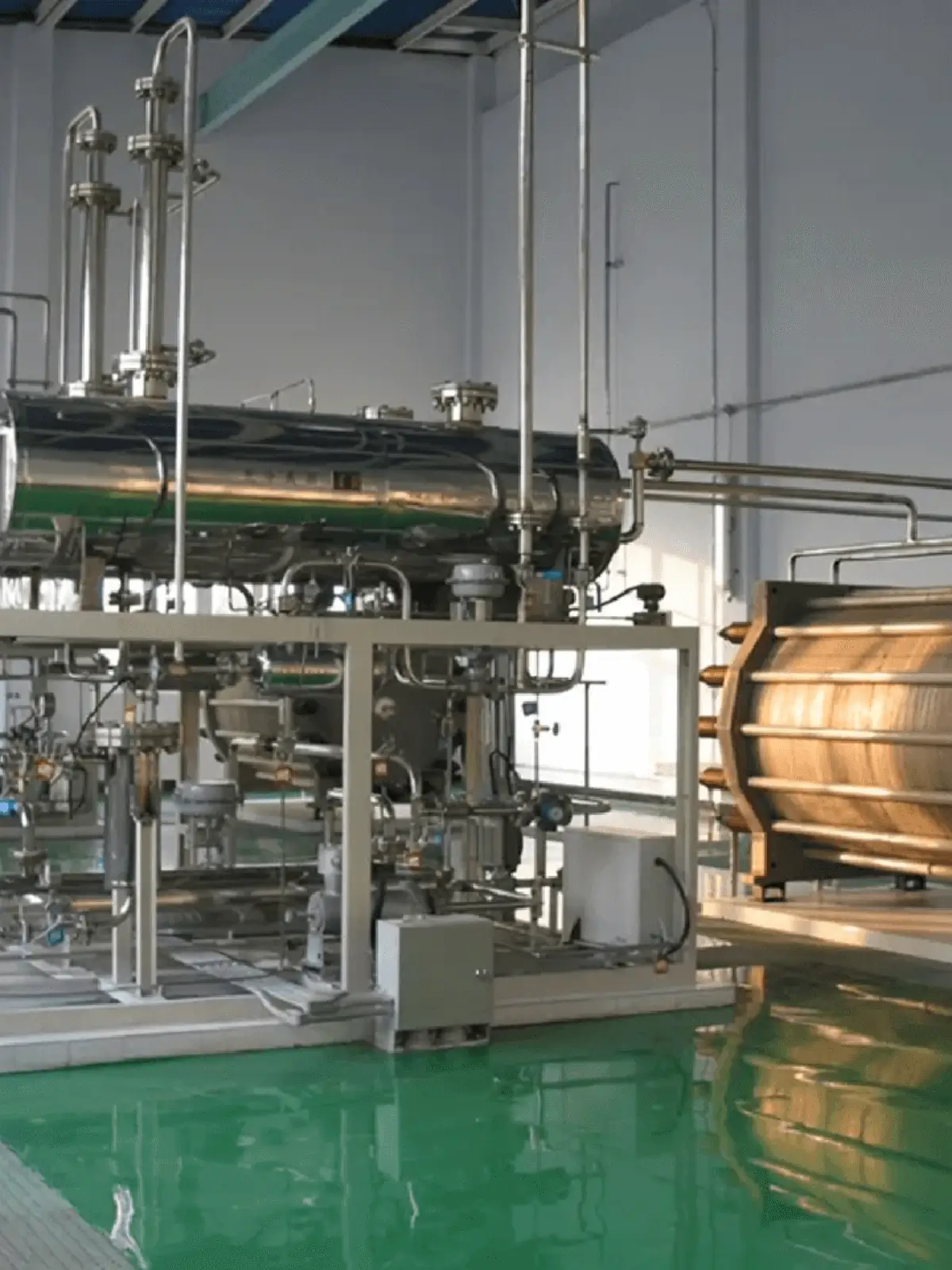
3. Each gas is stored in special tanks under safe pressure.
4. The resulting hydrogen can be used directly in industrial applications or as an energy source.
Features:
Hydrogen gas purity exceeds 99.999%.
Continuous or automatic operation is possible according to industrial needs.
Fully compatible with renewable energy systems (solar and wind energy).
Compact modular design for easy installation and maintenance.
Full control of operation via smart digital displays that display voltage, amperage, temperature, and pressure.
Uses:
Iron and steel plants.
Glass and metal industries.
Clean energy generation.
Hydrogen filling stations for hydrogen electric vehicles.


Reviews
Clear filtersThere are no reviews yet.