


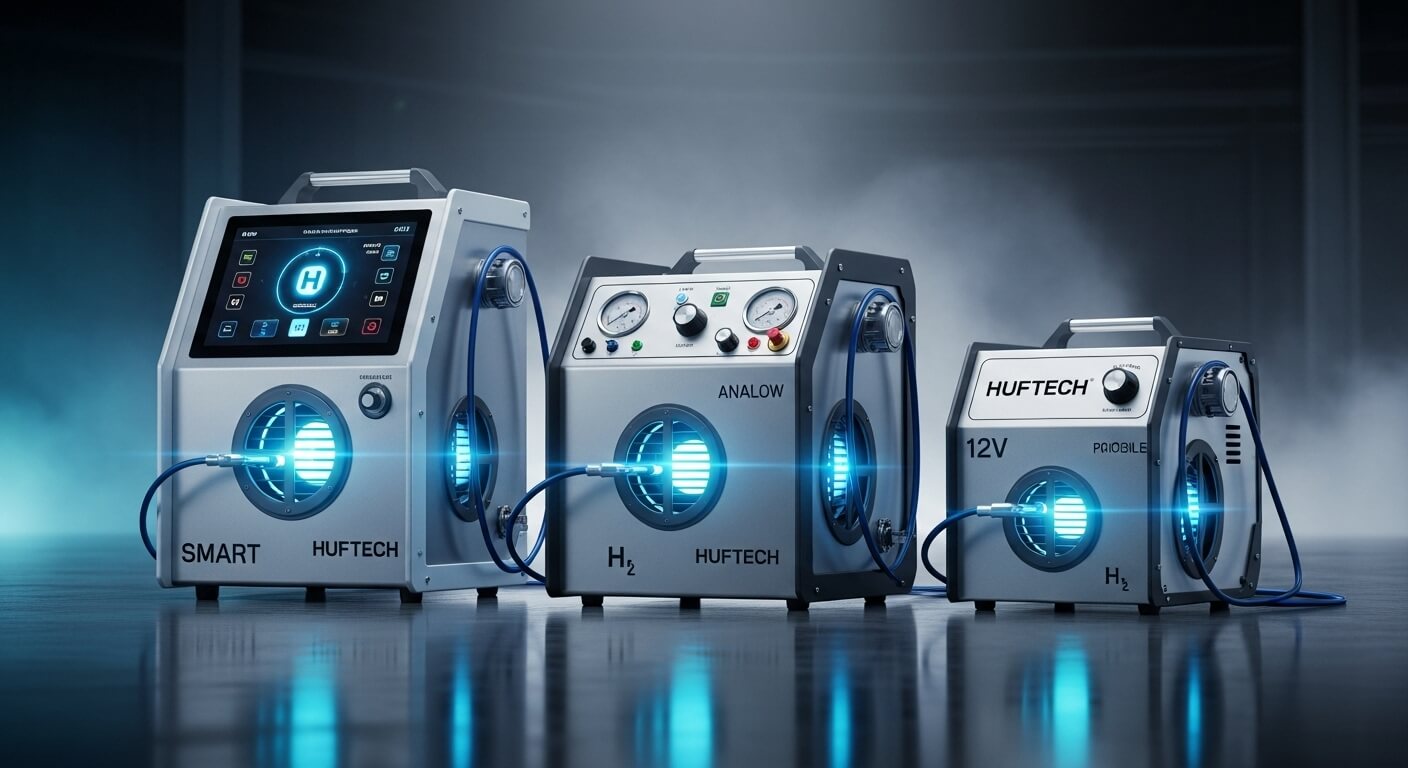


Ammonia decomposition plants for hydrogen production
This technology is considered one of the most modern and efficient methods for producing hydrogen in large quantities with significant savings in electricity consumption.
The principle is based on the decomposition of ammonia gas (NH₃) using high temperatures and special catalysts to separate hydrogen from nitrogen.
Working Principle:
1. Ammonia is introduced into a heating unit and catalysts.
2. Under the influence of heat, the chemical bonds between nitrogen and hydrogen atoms are broken.
3. The resulting hydrogen is separated and purified using advanced processes.
4. It is stored in large tanks or pumped to industrial use lines.
Advantages:
Continuous hydrogen production with capacities up to tens of cubic meters per hour.
Low electricity consumption compared to water electrolysis.
Able to operate in heavy industrial environments.
Safe and robust design that withstands high pressure and temperature.
Multiple safety systems for leak and temperature monitoring.
Uses:
Petrochemical plants.
Clean industrial fuel production.
Hydrogen electricity generation.
Metal smelting and heat treatment processes.

Analog manual operation
Original price was: 50.000,00 EGP.48.000,00 EGPCurrent price is: 48.000,00 EGP.A practical and economical version suitable for small and medium-sized workshops. It is controlled via switches and indicator panels, yet delivers powerful and stable performance.
Basic Functions
Hydrogen engine carbon cleaning.
Cleaning the environmental box without disassembling.
Cleaning the injectors without disassembling.
Technical Features
– Stable gas production system with high flow rate.
– Large electrolyte tank.
– Illuminated indicators for measuring water level and current.
– Multiple safety valves.
– Simple design for easy maintenance.
– Suitable for areas that do not require digital control.
Operational Features
– Low maintenance cost.
– Easy to operate.
– Corrosion and high temperature resistant components.
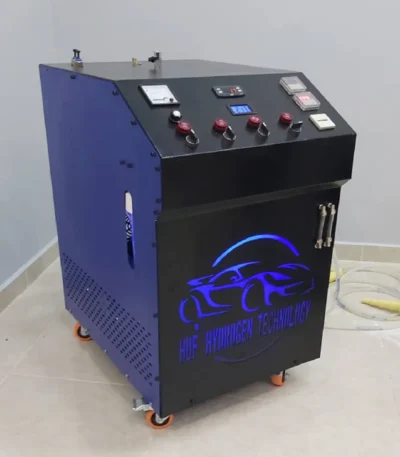
Cooling cycle cleaning device
Removes rust, salts and deposits from the cooling water system to improve engine performance.

DPF external environmental cleaner
Original price was: 75.000,00 EGP.70.000,00 EGPCurrent price is: 70.000,00 EGP.Function: A device designed to clean the catalytic converter (CEC) and diesel particulate filter (DPF) externally without having to open them.
What it does:
1. Pumps a special cleaning fluid at high pressure into the canister openings.
2. Removes carbon and ash accumulated inside the internal cells.
3. After cleaning, the canister is dried with hot air or steam to ensure it is free of any residue.
4. Restores the canister’s efficiency to up to 95% of its original state.
Importance:
Prevents canister clogging, which causes poor traction and increased fuel consumption.
Maintains the function of the oxygen sensor and engine safety.
An economical and quick alternative to replacing the entire canister.
Features:
Supports both gasoline and diesel systems.
Equipped with a powerful pressure pump and fluid filtration system.
Can be used to clean the DPF and EGR networks.
Easy to operate with a simplified digital interface.

dry ice cleaning machine
170.000,00 EGPConcept: It relies on frozen carbon dioxide (CO₂) molecules to break down dirt without water or chemicals.
Functions:
1. It pumps dry ice at high speed onto the dirty surface.
2. Upon contact with the surface, the ice evaporates instantly, creating a microburst that removes dirt.
3. It leaves no moisture or residue after cleaning.
Importance:
Safe for electrical and electronic parts.
Ideal for cleaning internal engines and sensitive components.
Does not cause rust or leave oily residue.
Features:
Fast and professional cleaning.
Environmentally friendly (chemical-free).
Reduces service time by half compared to traditional washing.
Can be used on cars and industrial equipment.


Hydrogen cutting and welding machines
150.000,00 EGPUnlimited Precision… and Power Beyond Expectations
HUFTECH presents a new generation of cutting and welding machines powered by pure hydrogen energy,
providing superior performance that combines efficiency, safety, and environmental sustainability.
—
Mechanism of Operation
The machines generate a mixture of hydrogen and oxygen inside the device through the electrolysis of water.
The gas is then passed through a fine metal nozzle, producing a pure, ultra-hot flame (up to 3500°C).
This flame is used for cutting and welding all types of metals with unprecedented speed and precision.
—
Technical Features
Completely clean flame with no carbon emissions.
High precision in cutting and welding, even for thick metals.
Intelligent temperature and pressure control via a digital display.
Economical design with low energy consumption.
Safe operation with automatic cut-off and flame-rebound prevention systems.
No need for external gas cylinders – the device produces its own gas.
—
Areas of Application
Heavy metal industries.
Steel and stainless steel factories.
Fabrication of structures, pipes, and equipment.
Industrial workshops and production line maintenance.
Field maintenance applications and power plants.
—
Safety and Reliability
All HUFTECH equipment complies with European Safety Standards (CE) and is equipped with real-time monitoring systems for temperature, pressure, and gas flow, ensuring stable and safe operation in all industrial environments.
—
Why Hydrogen?
Because its energy is cleaner, its heat is more stable, and it leaves no impurities after welding.
It can also be produced immediately, making it the future choice for clean manufacturing.
—
The Bottom Line
HUFTECH’s hydrogen cutting and welding machines are not just equipment, but a revolution in industrial energy—combining power, intelligence, and purity in one performance.

SMART Touch Screen – 4 Outputs
Original price was: 77.000,00 EGP.75.000,00 EGPCurrent price is: 75.000,00 EGP.Equipped with an interactive touch screen for complete control of each function. It features ease of use and precise monitoring during operation.
Basic Functions
Carbon cleaning from inside the engine.
Cleaning the environmental box without disassembly.
Cleaning the injectors without disassembly.
Cleaning the cooling system (radiator).
Additional Features
– Intelligent control of gas pressure and operating time.
– Display with real-time readings.
– Overheat and water shortage protection system.

steam cleaner
40.000,00 EGPFunction: Uses high-temperature, high-pressure steam to clean cars inside and out.
What it does:
1. Cleans the exterior of dirt and oil without using chemicals.
2. Kills bacteria inside the cabin and eliminates unpleasant odors.
3. Dissolves grease stuck on the engine or leather seats.
4. Equipped with two guns:
Dry gun for interior and upholstery.
Wet gun for washing the exterior and engine.
Importance:
Safe for paint and electrical circuits.
Very low water consumption compared to traditional washing.
Gives the car a natural shine and preserves interior materials.
Features:
High, continuous steam pressure.
Practical, easy-to-maneuver design.
Adjustable steam level according to usage.
Environmentally friendly and energy-efficient.

Transmission oil suction and change device
40.000,00 EGPDevice Concept: A device specialized in completely changing the oil of automatic transmissions in a professional manner, without leaving any old oil in the system.
Basic Functions:
1. It completely sucks the old oil from inside the transmission using precise pressure.
2. At the same time, it injects new oil at the same temperature as the old oil to avoid viscosity differences or thermal shock to the transmission components.
3. It contains an internal filter that prevents any impurities from passing through during the change process.
4. It can accurately measure the amount of oil entering and leaving the transmission through its electronic display.
Importance:
Ensures complete cleaning of the transmission circuit without any residual oil.
It preserves the life of the transmission and prevents slow shifts or misfiring while driving.
It reduces fuel consumption and restores normal transmission performance.
Technical Features:
Equipped with temperature sensors to determine the degree of new oil.
It contains a digital display for control and data reading.
Compact design makes it easy to transport and use in workshops and service centers.
Can be used with all modern oils and transmissions.


Water electrolysis plants
This technology splits water molecules (H₂O) into their two basic components: hydrogen (H₂) and oxygen (O₂) using an electric current.
This method is the cleanest and safest way to produce hydrogen, as it produces no carbon emissions or pollutants.
Working Principle:
1. Water is drawn into the electrolyzer.
2. A strong electric current passes through the electrodes, separating the hydrogen from the oxygen.
3. Each gas is stored in special tanks under safe pressure.
4. The resulting hydrogen can be used directly in industrial applications or as an energy source.
Features:
Hydrogen gas purity exceeds 99.999%.
Continuous or automatic operation is possible according to industrial needs.
Fully compatible with renewable energy systems (solar and wind energy).
Compact modular design for easy installation and maintenance.
Full control of operation via smart digital displays that display voltage, amperage, temperature, and pressure.
Uses:
Iron and steel plants.
Glass and metal industries.
Clean energy generation.
Hydrogen filling stations for hydrogen electric vehicles.
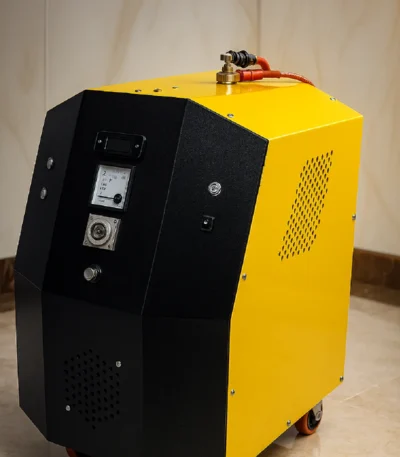
Works on car battery
30.000,00 EGPA portable device designed for use in outdoor workshops or mobile services. It requires no external power source, relying entirely on the vehicle’s battery power.
Basic Functions
Cleans carbon inside the engine using only hydrogen gas.
Technical Features
– Low-consumption power unit powered by a 12-volt battery.
– Protection system prevents excessive power draw.
– Lightweight and portable design.
– Stable hydrogen production despite low voltage.
– Works anywhere without constant power.
Operational Features
– Ideal for field services.
– Reduces start-up and setup time.
– Durable and vibration-resistant during transport.